✕ The Skeptic
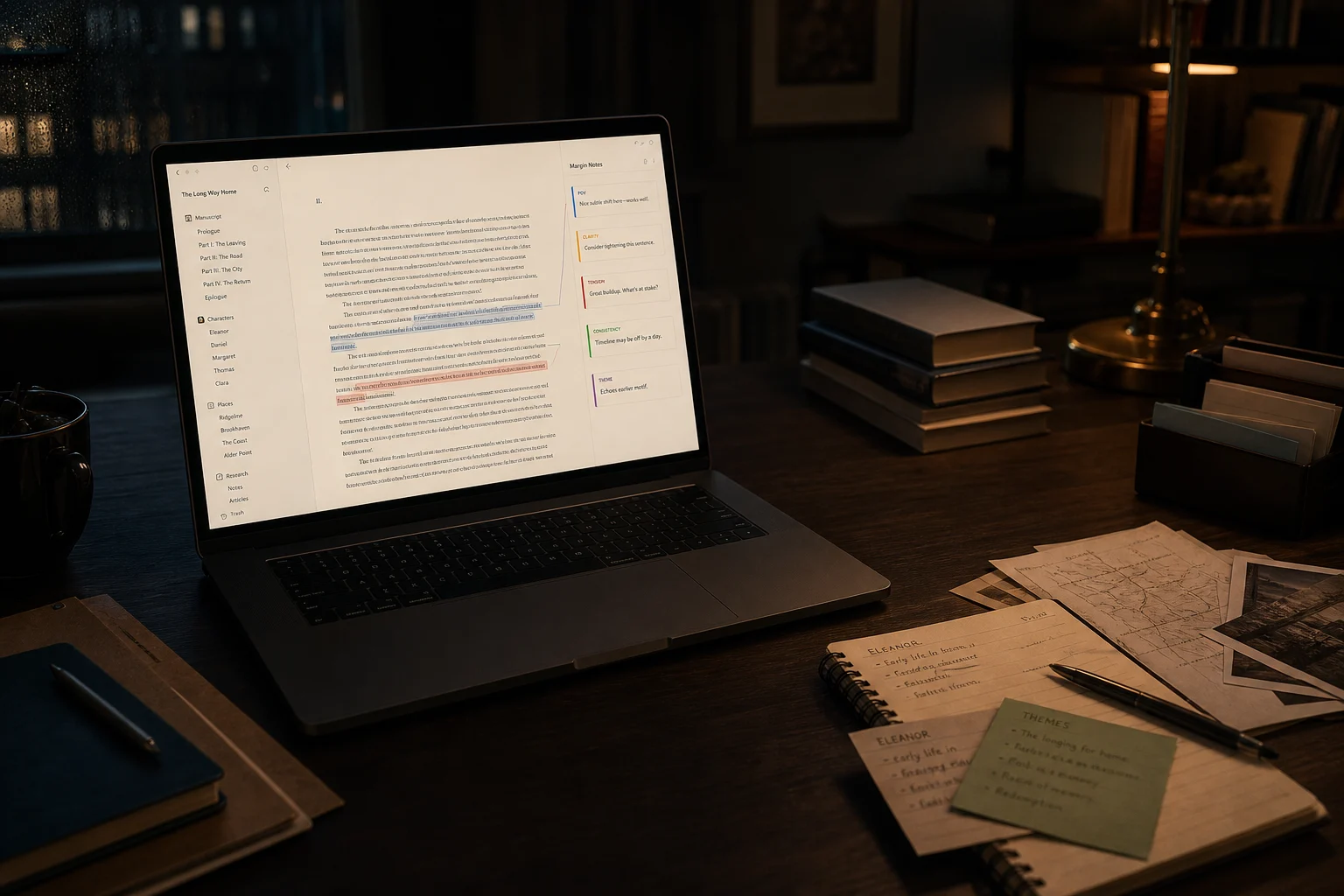
“The only room left” — have you checked the community centres? The claim needs a qualifier or a source.
Twyne is a writing app for essays and long-form drafts. Five editorial personas, a grading rubric, and a citation desk read every draft against your brief.
An Anti-Tabula-Rasa Quarterly
Vol. I · No. 267 · Thursday, the 24th of September, 2026
The city receives you before you arrive. You feel it in the tilt of the light, the way shopkeepers arrange their windows, the particular silence of a side street at dusk. Every neighbourhood is a paragraph; every boulevard a long sentence winding toward some punctuation you cannot yet see.
To write about a place is to argue with it. The buildings resist metaphor. The traffic ignores your symbolism. And yet—if you sit still long enough—the city begins to dictate its own grammar. You become less an author than a stenographer, recording what was already there.
The best drafts are not composed in isolation. They are written in the margins of other books, in the pauses between conversations, in the white space that surrounds another person's argument. Twyne keeps that margin visible: the brief, the cast, the apparatus, the citation desk—all arranged around the manuscript like editors leaning over a light table.
A blank page is not freedom. It is the absence of context.
This is why we begin with a dossier. Before the first sentence, the room knows what the piece is for, who it must convince, and what standard it will be held to. Every paragraph that follows has somewhere to point. The page is never empty; it is simply waiting for the right words.
Stop 1 of 8 · The Dossier
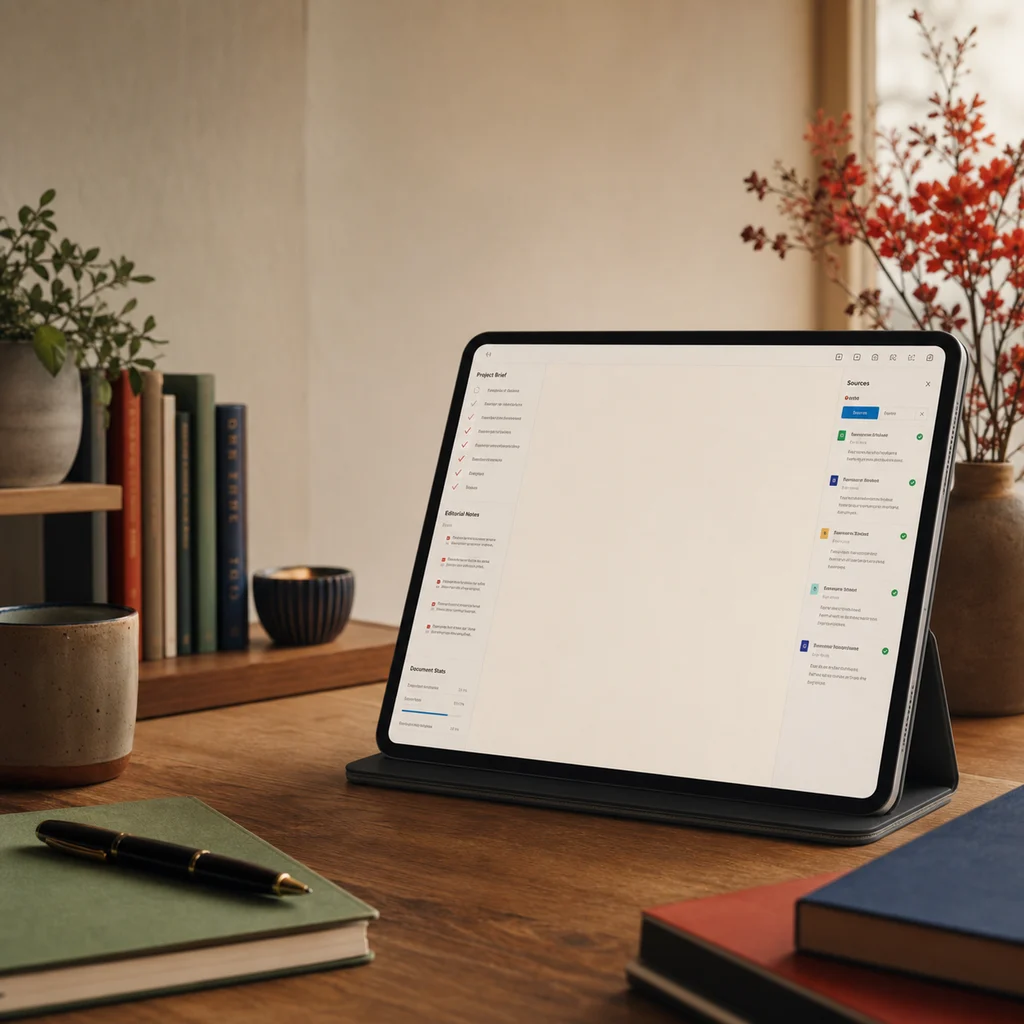
The brief every tool in the room reads — audience, purpose, and what good looks like — pinned beside the manuscript so no draft starts cold.
Plate I
Ten minutes of questions about audience, purpose, and what good looks like. The interview becomes a project brief that every tool in the room reads, so no draft starts from a blank page.
Plate II
A serious long-form editor with saved drafts and focus tools. Your work stays on your machine, organized into folios you can return to between sessions.
Plate III
The Skeptic, the Gentle Reader, the Line Editor, the Critic: each persona marks up the draft in the margin while a rubric grades thesis, structure, style, and evidence against the brief.
Plate IV
Twyne detects URLs, DOIs, ISBNs, and footnotes as you cite them, and keeps every source in one place where it can be inspected and verified.
Begin with the interview: ten minutes of questions, and every tool in the room knows what you are writing and who it is for.
Prefer your own desk? Download Twyne for desktop — Mac, Windows & Linux.